
Best dehumidifier for a UK flat
Quick answer
For a heated UK flat, a compressor dehumidifier rated 10–12 litres a day, run in the dampest room with the door shut. Go up to 12–16L if you dry washing indoors most days. If you keep rooms cold, below about 15°C, choose a desiccant model instead.
- Why does a 10L dehumidifier collect less than 10 litres?
- The rating is measured at 30°C and 80% humidity. At 20°C and 60% humidity, Meaco's 10L compressor model extracts 4.34 litres a day.

Absorbers for Absorbing Moisture at Croppable Length | Draught Excluder Condensation for Kitchens Bedrooms Baby Room Home Student Room Hotel
Photographed listing — tagged buy buttons go to the retailer, not another article.

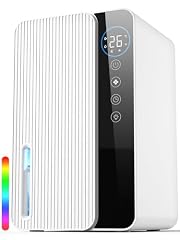

Which dehumidifier for which flat
| Your flat | Pick | Why |
|---|---|---|
| Studio or 1 bed, heated | Compressor, 10–12L | Enough for cooking, showers and a weekly wash |
| 2 bed, or laundry dried indoors most days | Compressor, 12–16L | Keeps up with a wet load on top of daily moisture |
| Persistent condensation and mould | Compressor, 20L | Headroom while the cause is being fixed |
| Rooms kept cold, below about 15°C | Desiccant, 7–10L | Extraction holds up in the cold; compressors fall away |
What a “10 litre” dehumidifier really collects
Dehumidifiers are rated in a hot, humid test room. Your flat in winter is cooler and drier, so the same unit pulls out far less. Meaco publishes the full table for its MeacoDry Arete One 10L compressor model:
| Room | Litres a day | Power |
|---|---|---|
| 10°C, 60% humidity | 1.41L | 129W |
| 20°C, 60% humidity | 4.34L | 151W |
| 20°C, 80% humidity | 7.25L | 157W |
| 30°C, 80% humidity (the rating) | 10.42L | 199W |
Source: Meaco product specification, read 5 November 2026. A compressor unit in a 10°C room extracts about a third of what it manages at 20°C, which is why cold flats suit desiccant models.
Why flats get condensation
Cooking, showers and drying washing all put water into the air. In a small flat it has less space to go, and it settles on the coldest surfaces: window frames, the corners of outside walls and the wall behind a wardrobe. UK government guidance on damp and mould (updated 1 April 2026) recommends working extractor fans, open trickle vents, a gap between furniture and outside walls, and internal doors shut while cooking or showering. A dehumidifier helps on top of those, not instead.
If you dry washing indoors, run the dehumidifier beside the airer in a small room with the door shut. Which? found (15 October 2026) that a dehumidifier almost halved drying time and pulled around two litres of water out of the air from one load.
Running costs
Look at the kit — then buy it

Reusable and Self Adhesive Window Moisture Absorbers | Absorbent Anti-Moisture Tape for Kitchen, Bedroom, Baby Room, Hotel
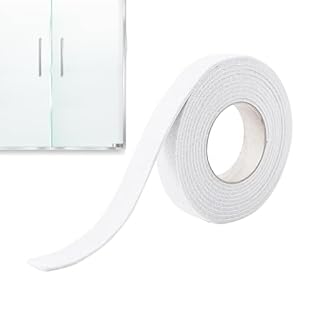
Easy Reusable and Self-adhesive Window Moisture Absorbers
We earn a commission if you buy through links on this page, at no extra cost to you. As an eBay Partner Network affiliate and an Amazon Associate, we earn from qualifying purchases. Links we earn from are marked “affiliate link”. Used and refurbished eBay listings are labelled as such. Full disclosure.
| Type | Hour† | Day* |
|---|---|---|
| Compact 10–12L (160W) | 4.2p | 27p |
| Mid 16L (250W) | 6.6p | 42p |
| Large 20L+ (400W) | 11p | 67p |
| Desiccant (650W) | 17p | £1.09 |
†At full power. *8 hours at 80% of full power: the humidistat switches the compressor off once the room reaches its setting. Typical wattages for each type.
How the running costs are worked out
cost = power (kW) × hours × share of time at full power × unit rate
Example, a compact 160W compressor unit: 0.16kW × 1 hour × 100% × 26.32p/kWh = 4.2p.
Unit rate: 26.32p/kWh, the GB average Direct Debit electricity rate under the Ofgem price cap for 1 October to 31 December 2026. Standing charges are left out because you pay them whatever you switch on. Your own tariff may differ.
Dehumidifiers in stock now, lowest power first
Costed with the same formula. Open a unit to see the retailers that have it and today’s price on the retailer’s own page.
| Unit | Extraction | Power | Hour† | Day* | Price |
|---|---|---|---|---|---|
| Portable Dehumidifier 500ml Tank 300ml/day Wi-Fi Timer Auto Off 20W White | — | 0.5p/hr | 3.4p | £31.90 | |
| Klarstein Shetland 600 Mini Dehumidifier 22W White Blue Tested Working | — | 0.6p/hr | 3.7p | £18.95 | |
| LIPONTAN D1 Mini Dehumidifier 1500ml DC 9V 22.5W Timer Quiet Auto Shut-Off | — | 0.6p/hr | 3.8p | £21.50 | |
| Mini 360° Air Flow Dehumidifier SC1 White Touch Timer Auto Shut Off 22.5W | — | 0.6p/hr | 3.8p | £23.58 | |
| 1000ml Dehumidifier Electric LED Light for Home Condensation Moisture Damp 22.5W | — | 0.6p/hr | 3.8p | £32.99 | |
| 1.8L Dehumidifier Electric Night Light for Home Condensation Moisture Damp 22.5W | — | 0.6p/hr | 3.8p | £34.99 | |
| Dehumidifier Electric 1800ml 22.5W Portable Auto Shut Off Timer for Home Office | — | 0.6p/hr | 3.8p | £34.99 | |
| 1800ml Dehumidifier Electric LED Light for Home Condensation Moisture Damp 22.5W | — | 0.6p/hr | 3.8p | £34.99 |
†At full power. *8 hours at 80% of full power. In stock at the last check, lowest power first. Power is read from the retailer listing.
Every dehumidifier we check →Compressor vs desiccant →Stop condensation on windows →Renting? Condensation evidence →Running cost calculator →
FAQ
Dehumidifiers for flats: common questions
- What size dehumidifier do I need for a flat?
- For a heated studio or one-bed flat, a 10–12L compressor model. For a two-bed flat, or if you dry washing indoors most days, 12–16L. The litre figure is measured at 30°C and 80% humidity, so at normal room temperature a unit extracts well under half its rating.
- Compressor or desiccant for a flat?
- Compressor, if the flat is heated: it uses less power for the water it removes. Desiccant, if you keep rooms cold. Meaco's own figures for its 10L compressor model show it extracting 4.34 litres a day at 20°C but 1.41 litres at 10°C.
- How much does it cost to run a dehumidifier in a flat?
- A compact compressor unit drawing about 160W costs 4.2p an hour at full power and about 27p for an 8-hour day at 80% of full power, at the Ofgem rate of the time. A desiccant unit drawing 650W costs about £1.09 for the same day.
- Where should a dehumidifier go in a flat?
- In the room with the worst condensation, usually the bedroom or the room you dry washing in, with the door shut. Keep most units at least 20cm from walls and furniture so air can get in.
- Does a dehumidifier fix damp in a rented flat?
- It removes moisture from the air, which cuts condensation. It does not fix a leak, a broken extractor fan or a cold wall. Government guidance for landlords says the root causes of damp and mould are usually building defects, poor ventilation, inadequate heating or poor energy efficiency, not tenants' everyday activities.